



SimSpace is a set of pixel-art ecosystem simulations developed by me, inspired by the ecosystem dioramas in the 2000s nature encyclopedias I grew up with. Each one is a real place, modelled from the ground up, and each runs right in the browser on SimSpace, where you choose between them on a spinning globe. There are two so far: Atka Bay in Antarctica, and Brooks River in Alaska.
In both, every species is kept to scale with the others, and I looked into how each animal actually behaves and tried to give them as many of their characteristic behaviors as I could. Neither stops after a year: the seasons keep turning, year after year.
Atka Bay
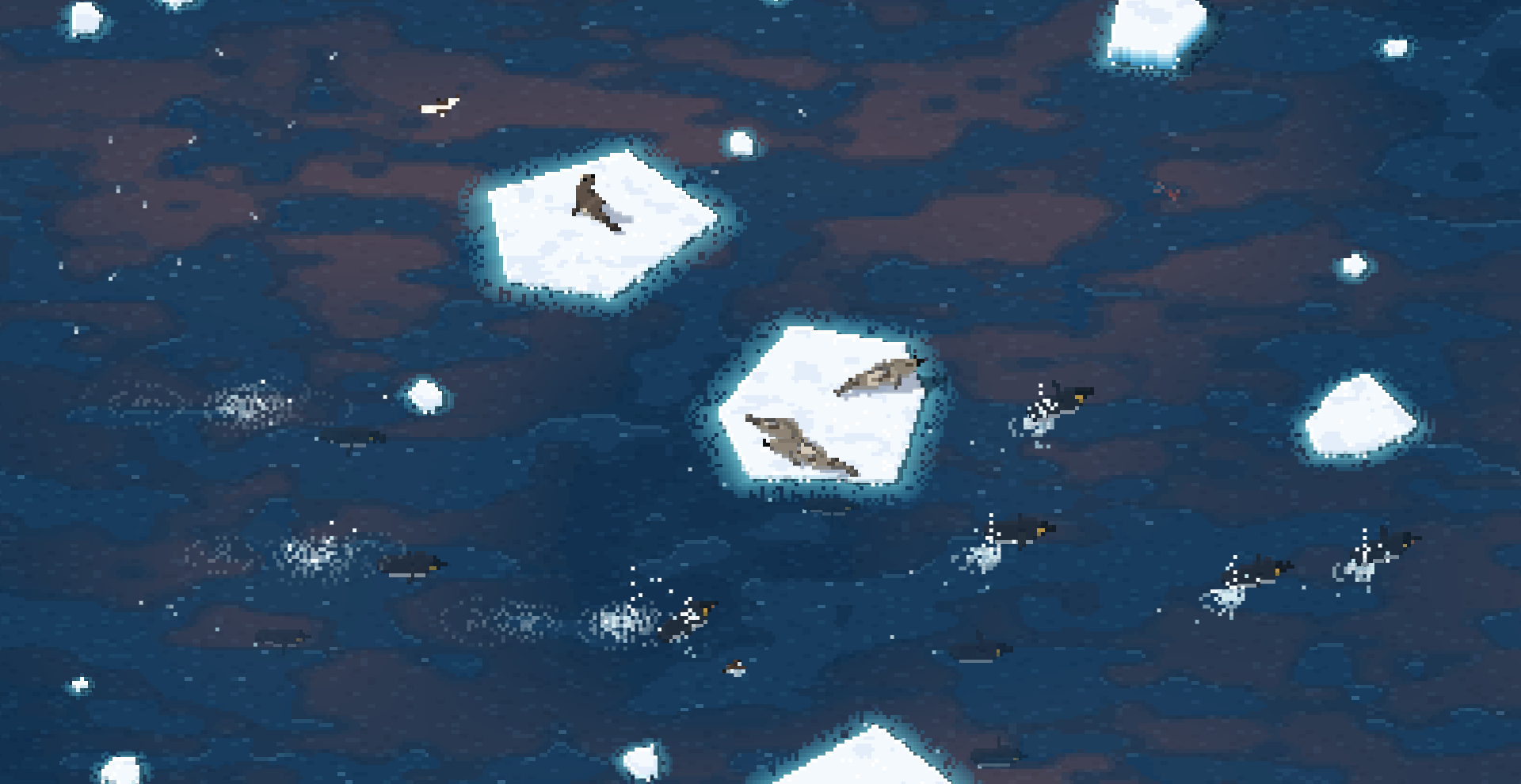
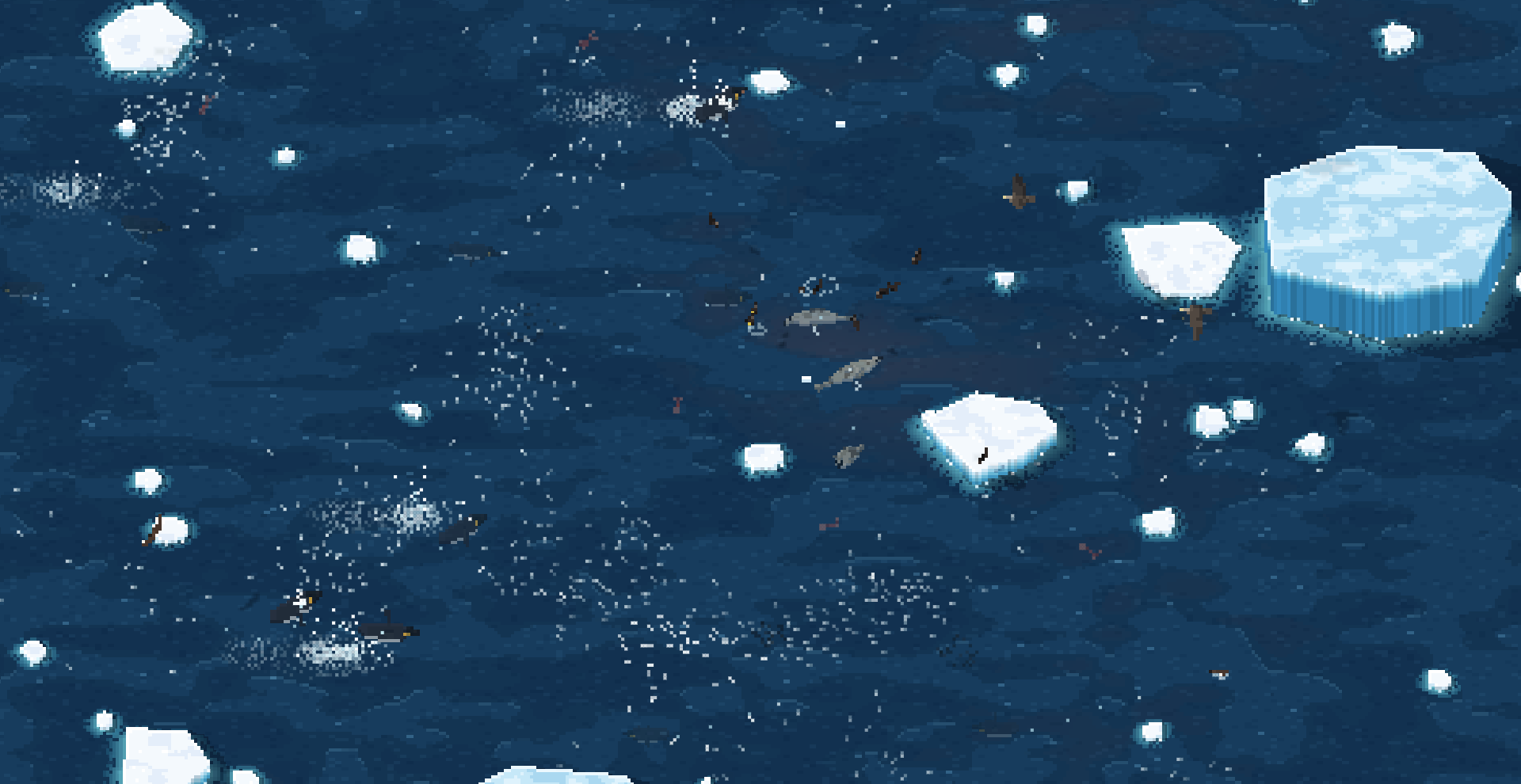
Atka Bay follows an emperor penguin colony on the sea ice of the Antarctic coast. There are twenty-one species in total, including penguins, seals, seabirds, and the fish, squid, and krill that they all depend on. The emperors huddle together through the winter, the seals haul out onto the ice to rest, and the petrels come in from the sea during the summer.
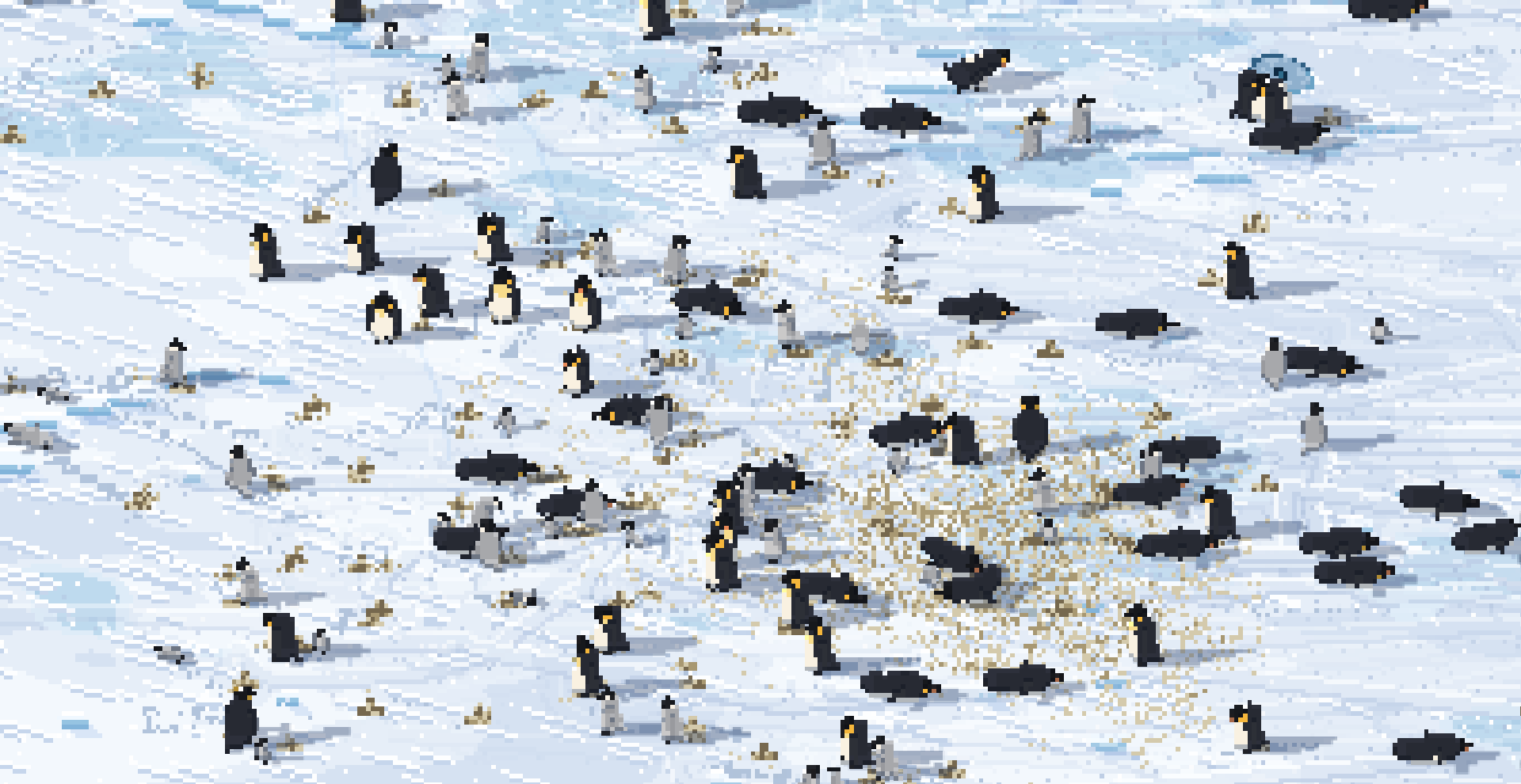
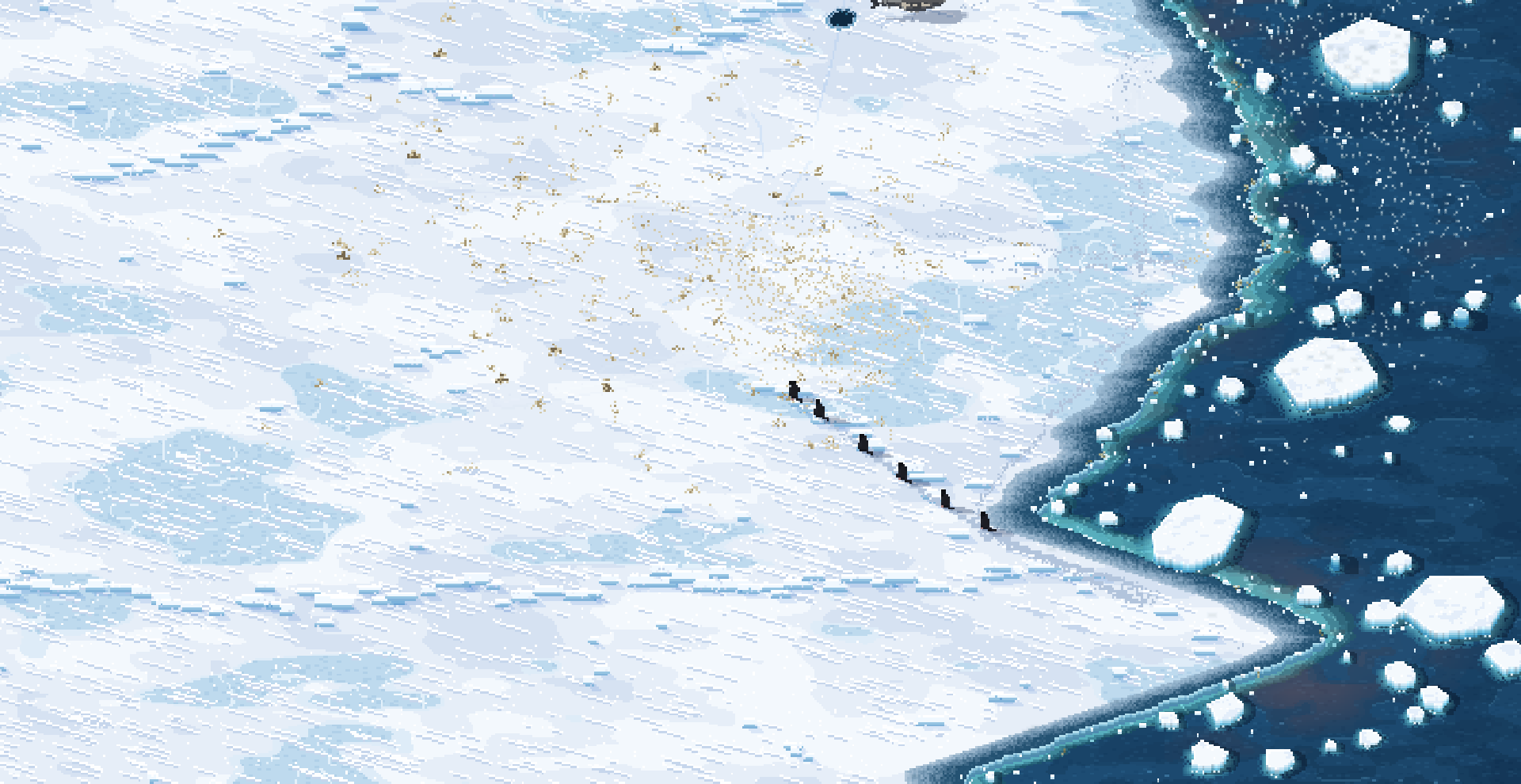
The ice sheet also gains and recedes over the course of the year, which changes where the animals are able to go and what they are able to do.
Brooks River
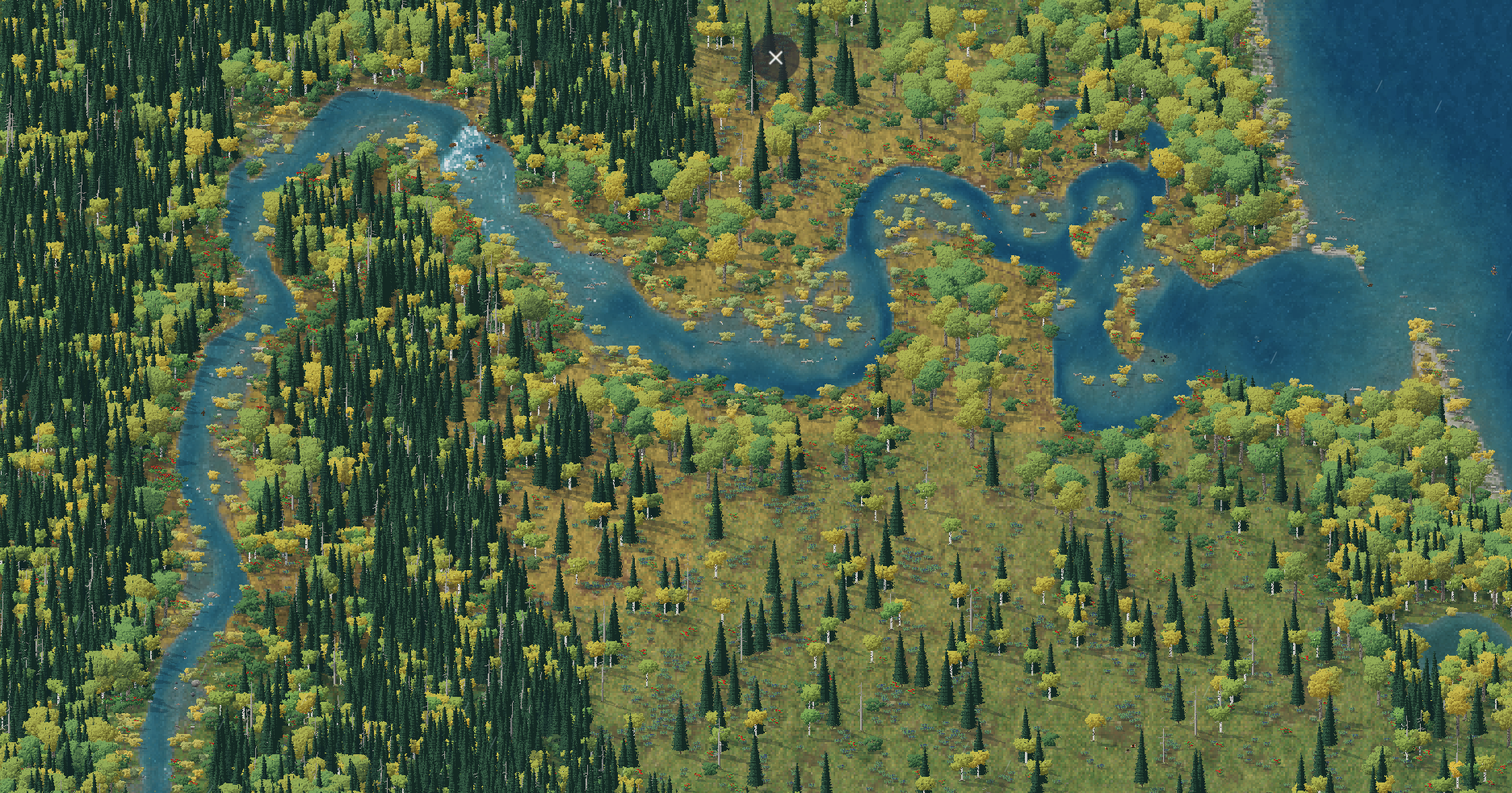
Brooks River is a short, clear river between two lakes in Katmai National Park, best known for the brown bears that fish for sockeye at its falls. The simulation covers the whole river and the forest around it: spruce and birch, alder and willow, fireweed and twenty-two kinds of plant in all, and twenty-three animals so far, from the bears and the salmon to beavers, otters, foxes, moose, snowshoe hares, eagles, ducks and five kinds of fish.
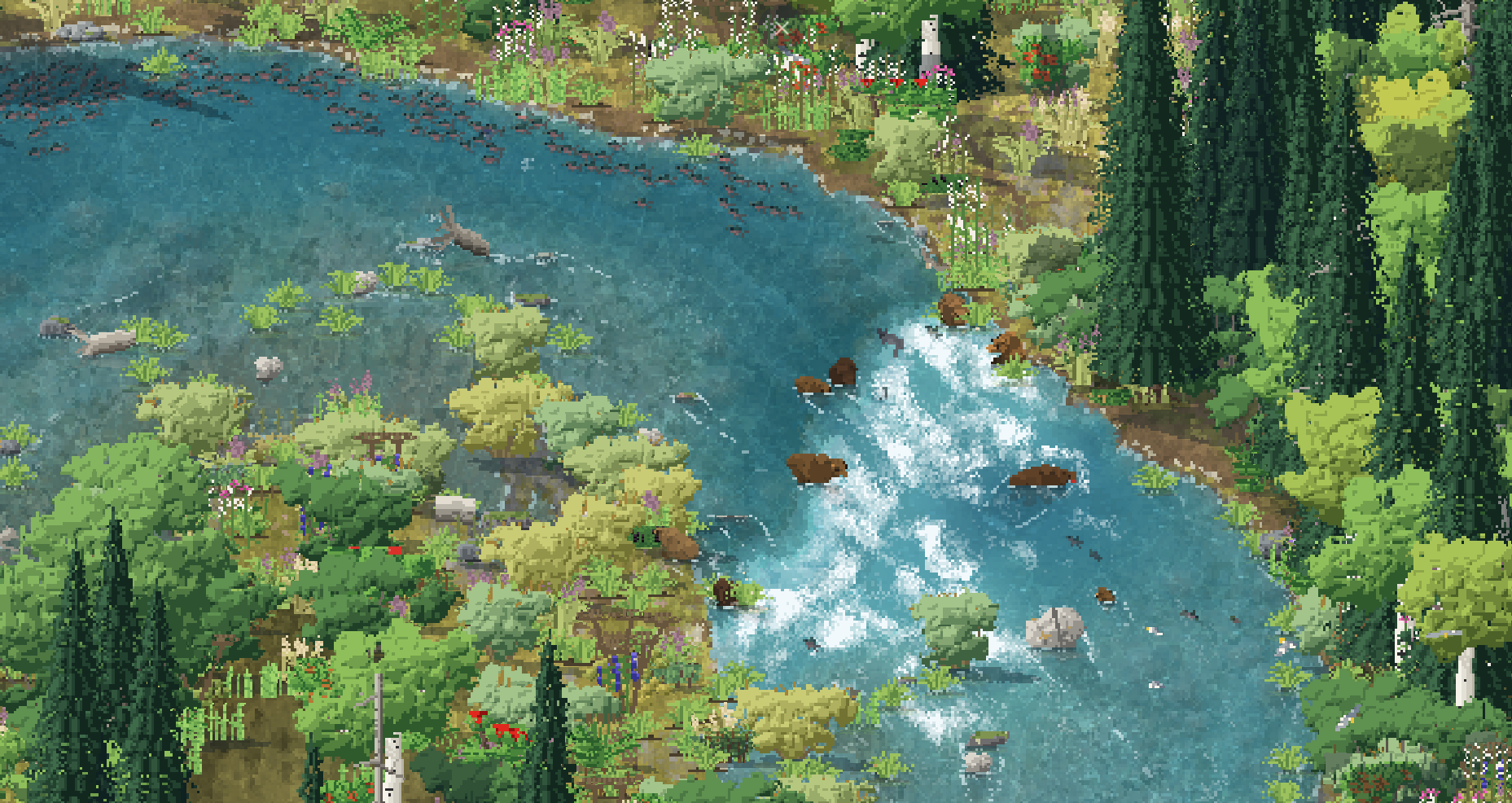
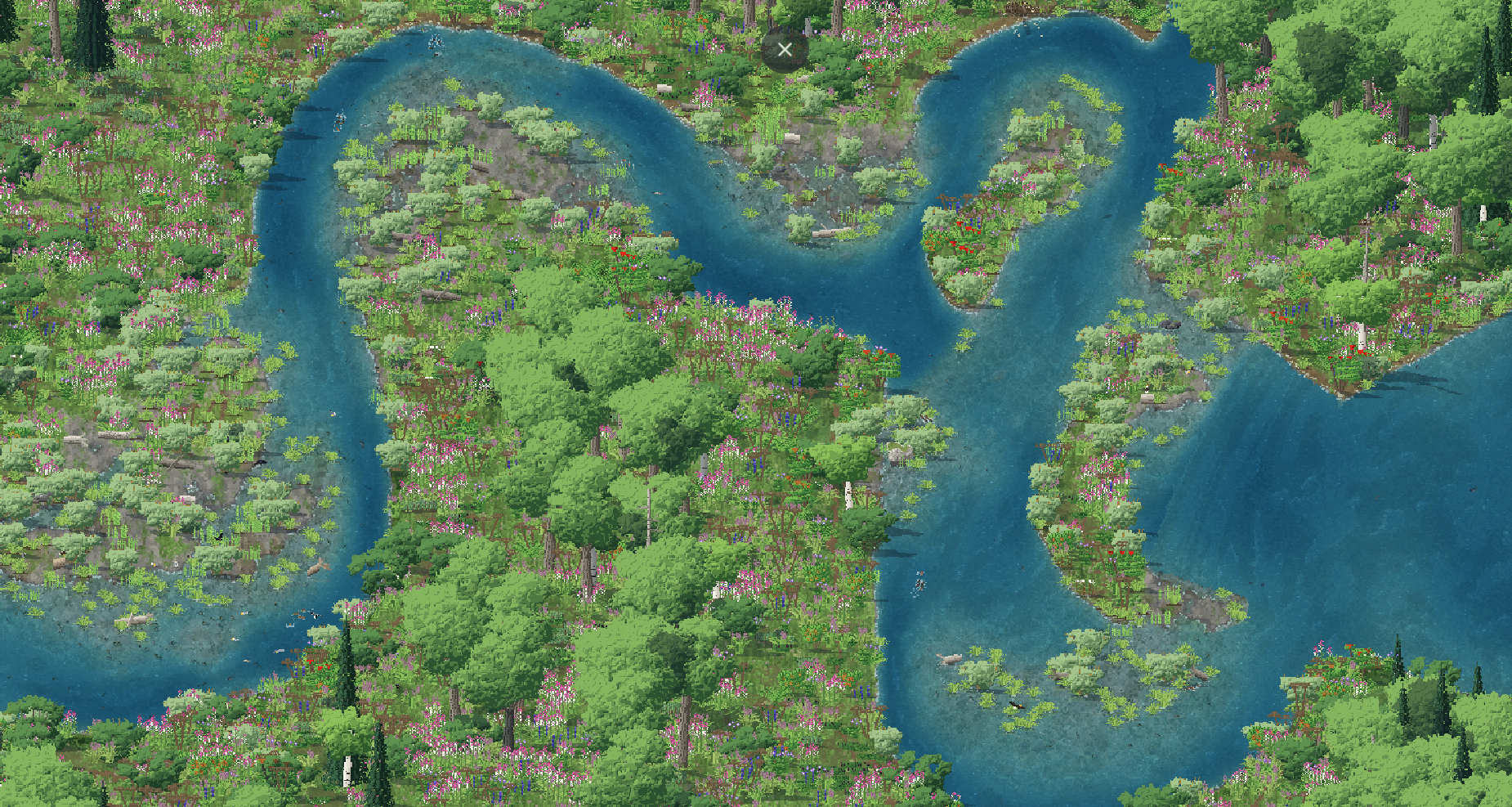
The salmon run shapes the whole year. The sockeye come up from the lake in early summer, the bears gather at the falls to meet them, and the rainbows, grayling and char follow the spawning fish for their eggs. The rest of the river lives around it: the beavers cut willow and keep their lodge and dam, the foxes raise their kits and hunt voles and hares, and the moose browse the shallows.
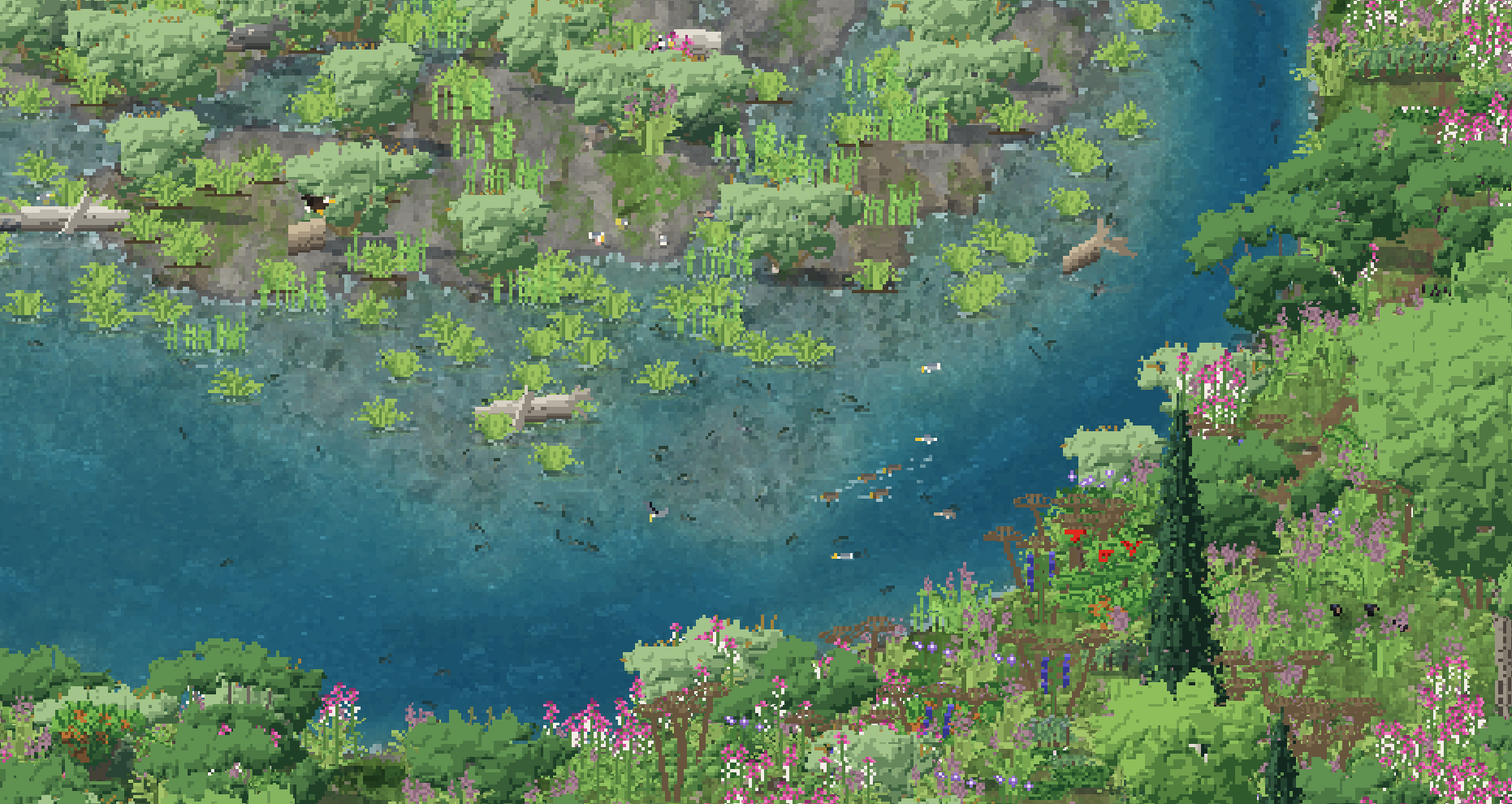
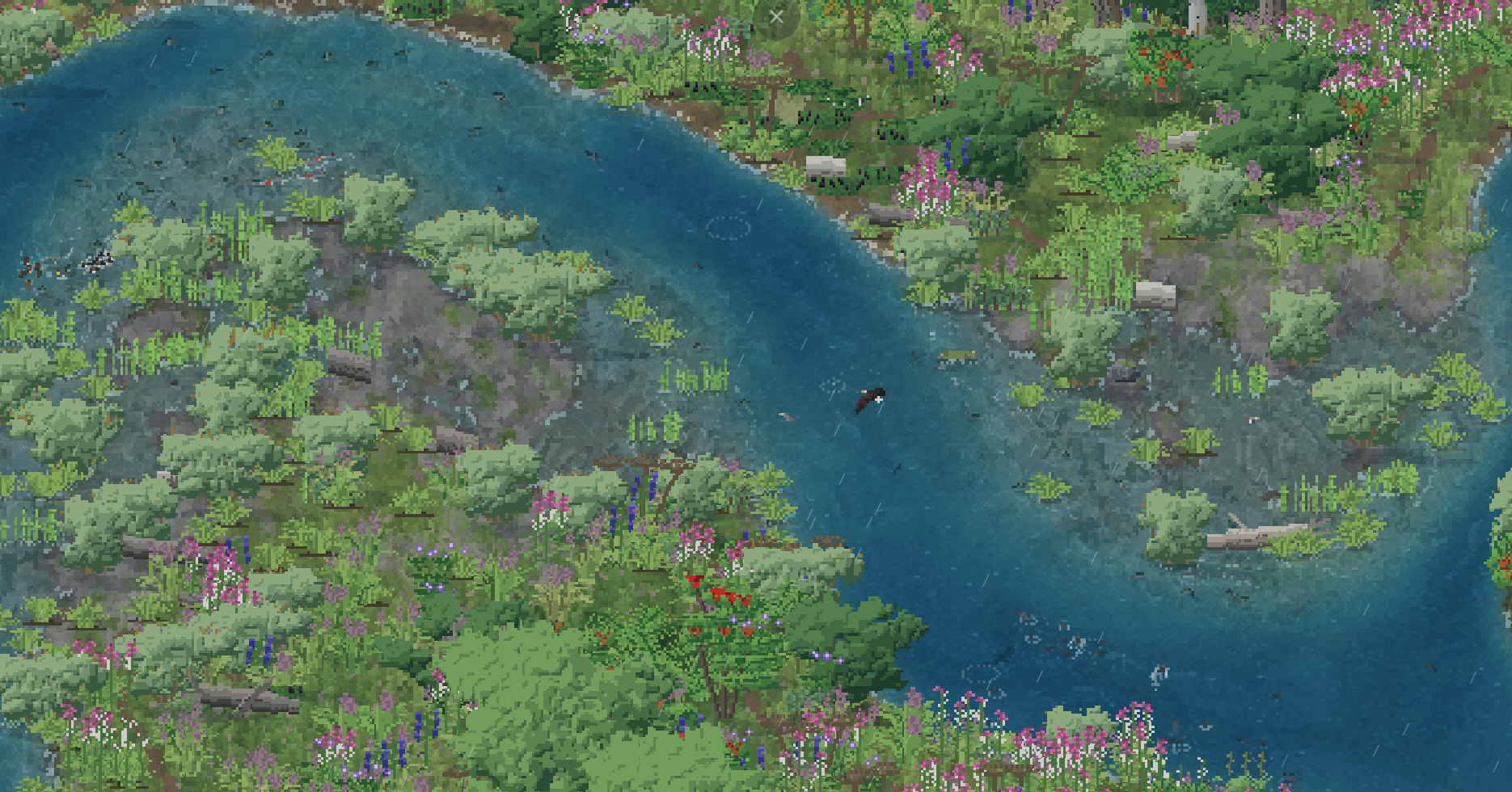
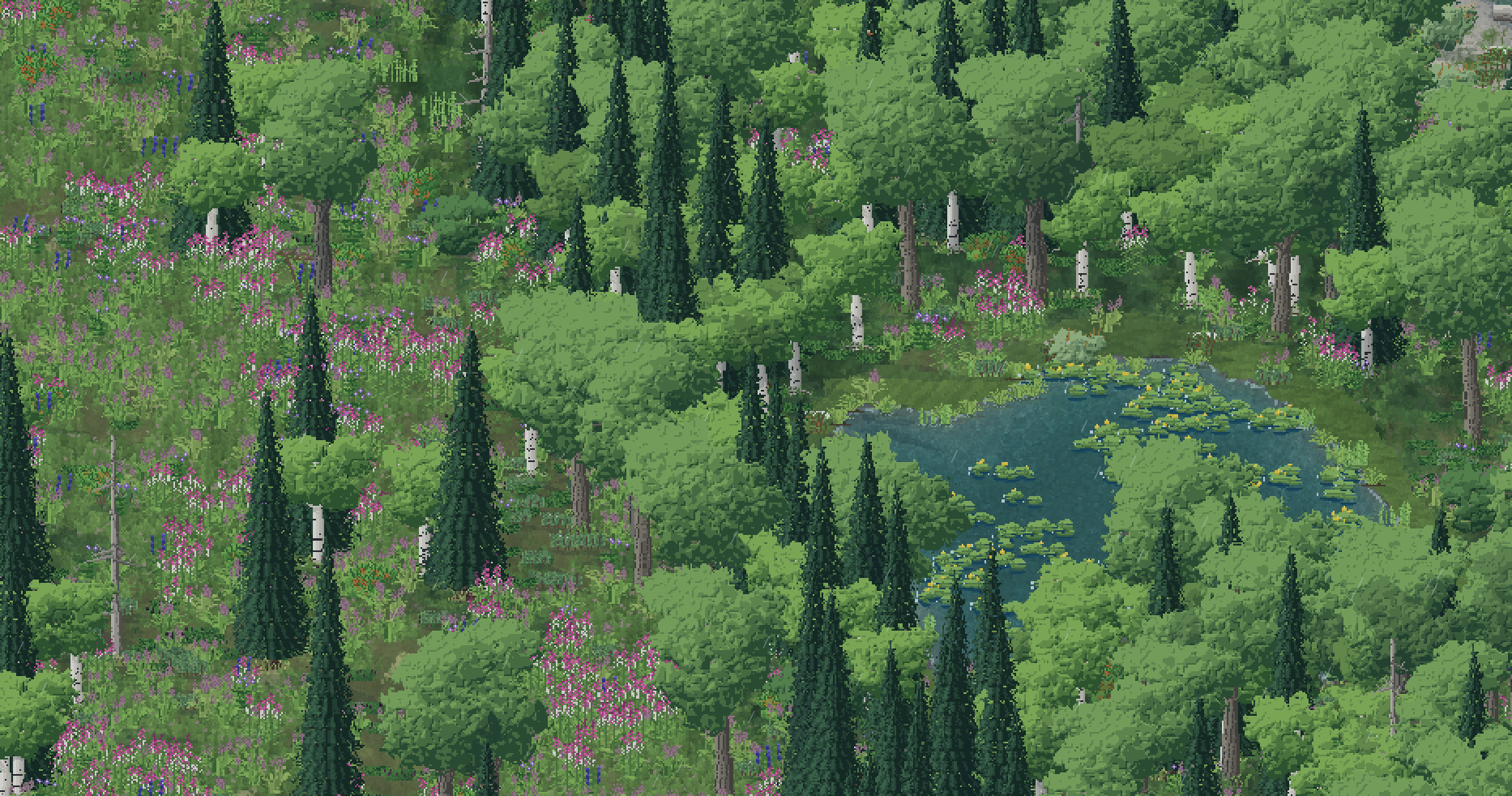
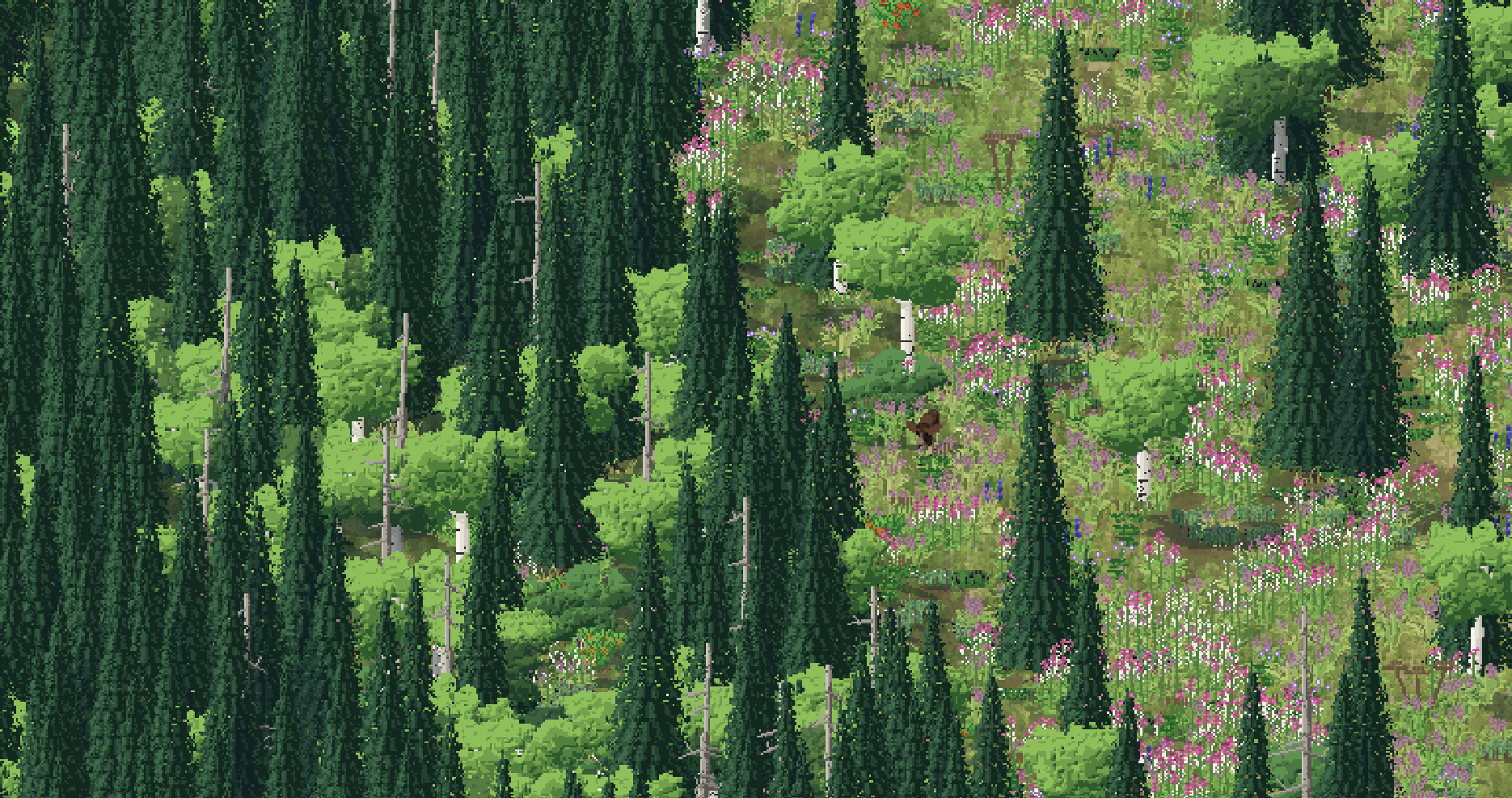
The forest and the river change with the seasons as well. The leaves turn in the autumn, the snow comes in, and the river freezes over, so the animals have to change what they do: the bears go off to their dens, the beavers live under the ice on their store of branches, and the hares turn white.
Field notebooks
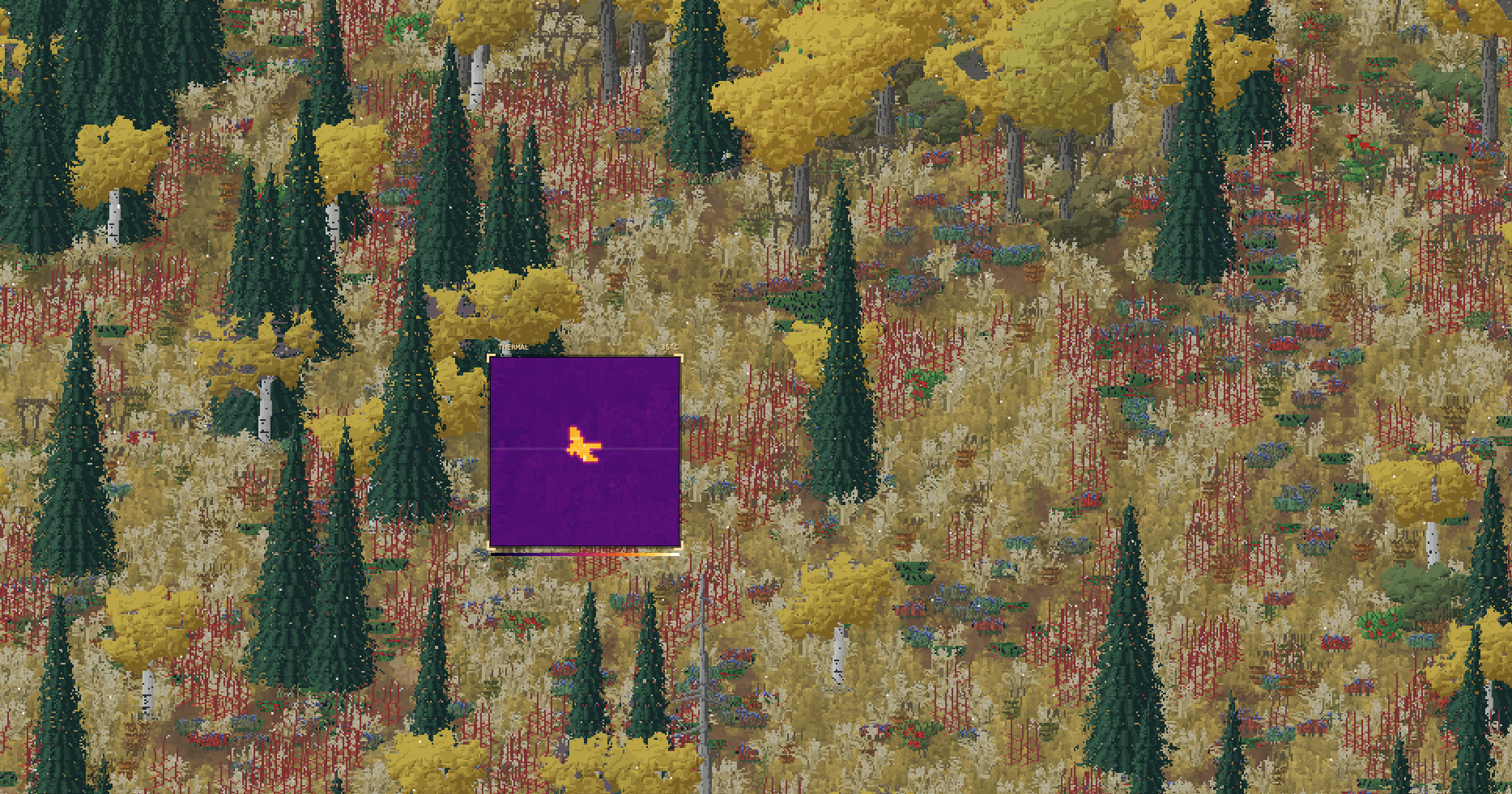
Both also work as a game. Clicking on an animal for the first time takes a photo of it and adds it to a field notebook, along with the date you found it on. Some of the animals only show up during certain seasons, so finding them all takes some patience.
Play them on SimSpace.